
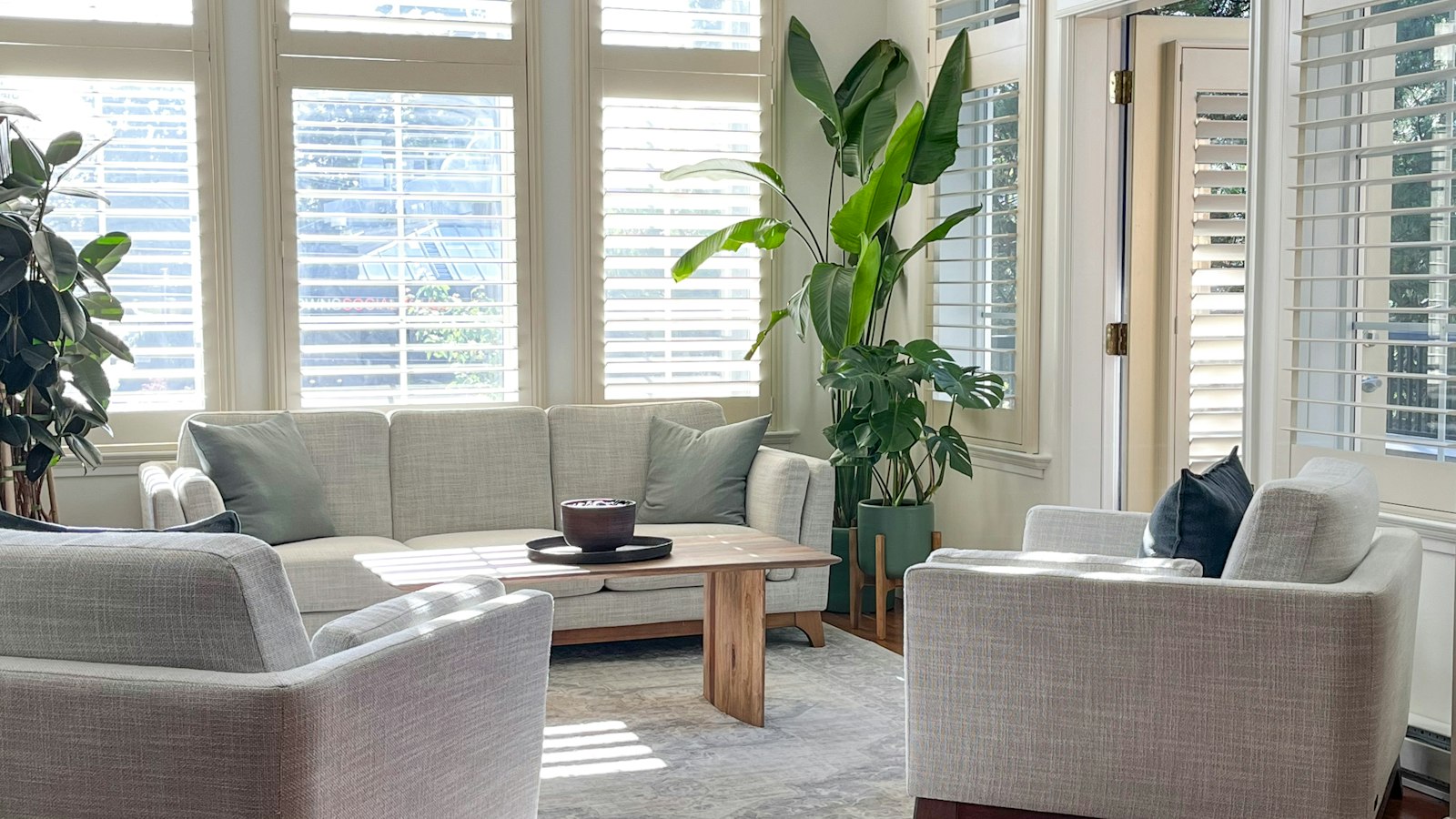
The same blind that thrives in a bright, dry Ashburn sunroom can warp, spot with mildew, or simply underperform in a damp, grey-lit Richmond condo. Climate is one of the biggest factors in how a window treatment looks and lasts, yet it's the one most homeowners skip past on the way to picking a colour. This guide breaks down what actually works in two very different markets we serve — coastal Richmond and Burnaby, BC, and four-season Ashburn, VA — so you can choose blinds and shades built for the weather outside your windows.
Why Climate Should Drive Your Window Treatment Choice
Windows are where your home meets the weather. They're the largest source of heat loss in winter and unwanted heat gain in summer, and the microclimate right at the glass — condensation, humidity, direct sun — is harder on materials than anywhere else in the room. Choosing climate-appropriate window treatments means matching three things to your local conditions: the material's resistance to moisture and UV, the product's insulating ability, and how it handles the quality of light you actually get through the year. Get those right and your blinds last longer, your rooms stay more comfortable, and your energy bills come down.
Richmond & Burnaby, BC: Coastal Damp and Low Grey Light
The Lower Mainland climate is mild but persistently wet. Richmond sits at sea level on the Fraser River delta, Burnaby climbs the hills just east, and both spend roughly half the year under cloud with high ambient humidity from fall through spring. Summers are bright and comfortably dry, but the defining challenge for window coverings here is moisture that never fully goes away, plus long stretches of flat, low-angle daylight.
The moisture problem
Real wood blinds and untreated natural-fibre shades are the wrong call for most BC coastal homes. Over a few damp seasons the slats absorb moisture, bow, discolour, and can grow mildew along the edges — especially on north-facing windows and in condos with less airflow. Single-glazed or older aluminum-framed windows also sweat heavily in winter, and that condensation sits directly against the bottom rail of whatever you hang.
Best picks for Richmond & Burnaby homes
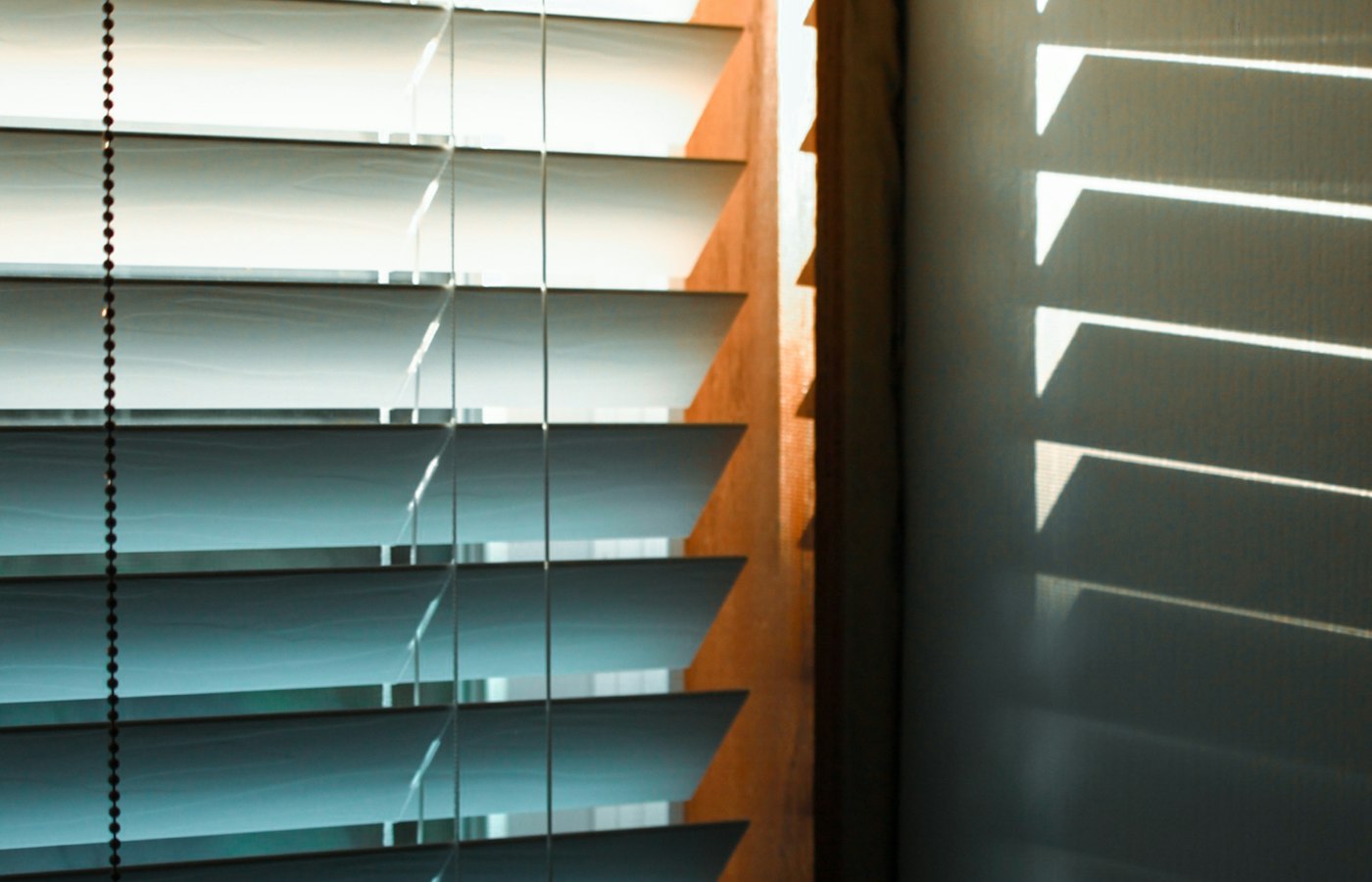
2" faux wood blinds are the workhorse choice for window blinds in Richmond, BC. A polymer or PVC-coated composite core gives you the warmth of a wood look with none of the warping, so they hold their shape and colour for years in coastal damp and wipe clean of the grime that comes with wet-weather living. For bedrooms and media rooms, moisture-resistant blinds like vinyl-backed roller shades and zebra blinds resist mildew and give you crisp light control on the days you do get sun.
For custom shades in Burnaby, BC homes that feel cold and cave-like in winter, insulated cellular shades are worth the upgrade. Their honeycomb cells trap a layer of air against the glass, cutting the chill off a drafty window while still letting soft daylight through a light-filtering fabric — which matters when the sun barely clears the rooftops from November to February. Choose top-down/bottom-up operation to pull light in from above while keeping privacy at eye level on a grey street.
Making the most of low winter light
In a climate this overcast, avoid heavy blackout fabrics in living spaces — you'll spend the short daylight hours in gloom. Lighter, light-filtering roller or cellular fabrics keep rooms feeling open, and a shade that stacks tightly at the top of the window (a good roller or a cordless cellular) clears the glass completely so you lose as little daylight as possible when it's open.
Ashburn, VA: Humid Summers, Cold Winters, Strong Sun
Ashburn's climate asks more of a window treatment across the year than the BC coast does. Summers are hot and humid, with indoor humidity spiking in July and August and strong, high-angle sun pouring into south- and west-facing rooms. Winters genuinely get cold, with hard freezes and biting wind that pull heat straight out through the glass. A blind here has to handle heat, moisture, UV, and cold — not just one of them.
The four-season swing
That range is why a single-purpose product often disappoints in Ashburn. A gorgeous linen Roman shade with no lining does little against an August heat load; a thin aluminum blind does nothing to slow January heat loss. The best-performing setups here either use one product that covers multiple bases or layer two treatments on the same window.
Best picks for Ashburn homes
For blinds in Ashburn, VA, insulated cellular shades are the strongest all-rounder. The same trapped-air cells that block winter heat loss also slow summer heat gain, and a double-cell construction pushes the insulating value higher for the windows that take the worst of the afternoon sun. Pair them with solar roller shades on big view windows: a solar screen fabric reflects and filters UV before it enters the room, knocking down heat and glare while keeping your sightline to the yard.
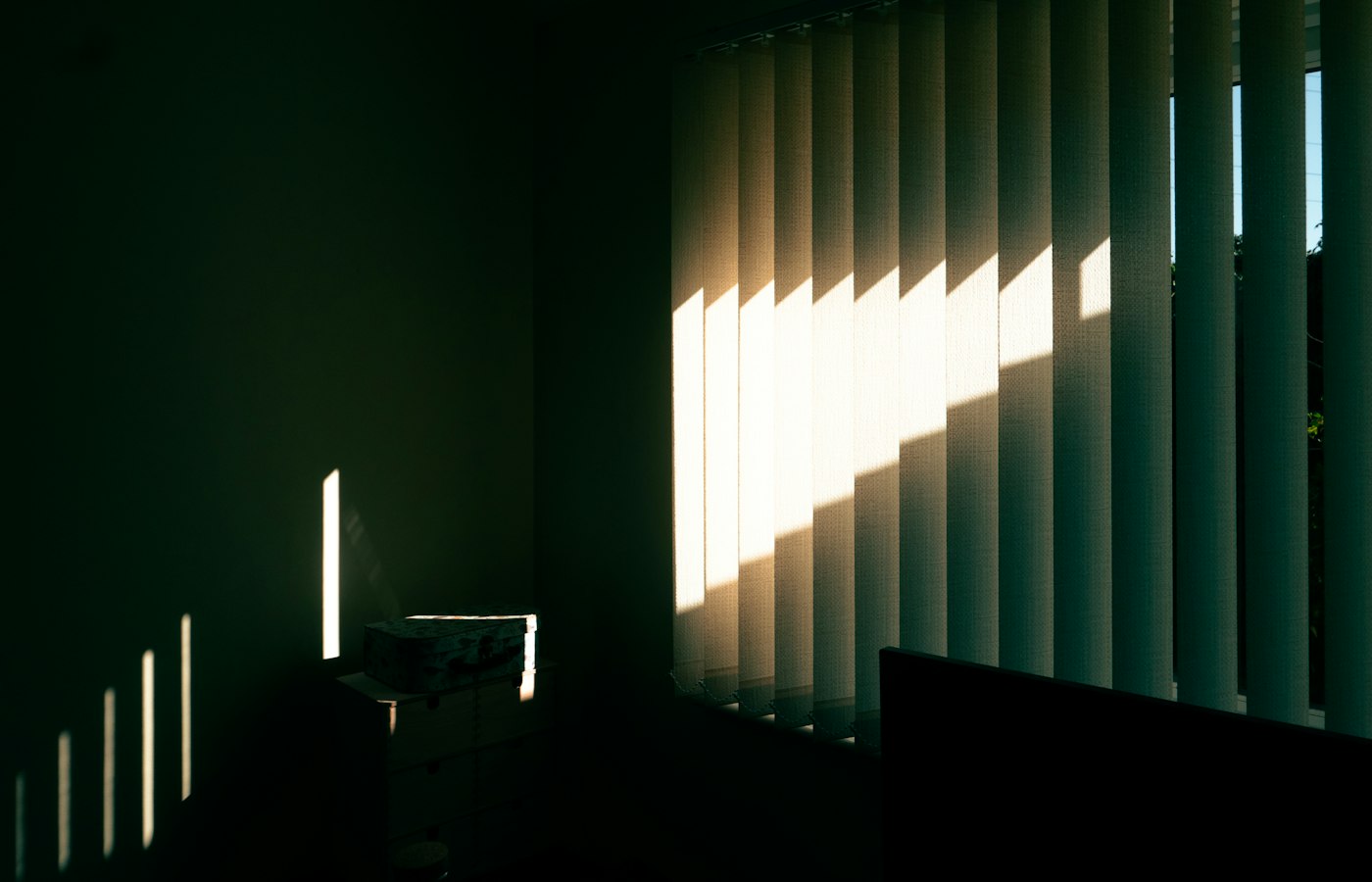
For sliding patio doors and wide windows, vertical blinds in a PVC or moisture-tolerant fabric vane are practical and easy to angle against a moving sun. In humid bathrooms and kitchens, stick with faux wood, vinyl, or PVC-backed fabrics for the same reasons they work on the BC coast — they shed moisture instead of absorbing it.
Winter insulation
On the coldest nights, a snugly fitted shade mounted inside the window frame — or better, outside-mounted to overlap the frame — creates a still-air pocket that measurably reduces heat loss. Cellular shades do this best, but even a well-fitted roller or a layered blind-plus-drapery combination helps. This is the piece BC homes can treat as optional and Ashburn homes really shouldn't.
BC Coast vs. Ashburn: The Short Version
- Primary challenge: Richmond & Burnaby — year-round damp and low light. Ashburn — humid heat, strong sun, and cold winters.
- Material priority: BC coast — mildew and moisture resistance first. Ashburn — moisture resistance plus UV stability and insulation.
- Best all-rounder: Faux wood blinds for BC coastal durability; insulated cellular shades for Ashburn's temperature swing.
- Light strategy: BC — light-filtering fabrics that protect scarce daylight. Ashburn — solar and blackout layers that manage an aggressive sun.
- Winter insulation: A nice-to-have on the mild BC coast; close to essential in Ashburn.
Materials That Perform in Any Climate
A few options earn their keep on both coasts. Faux wood and vinyl blinds are effectively immune to humidity. PVC-backed and performance polyester shade fabrics resist moisture and clean easily. Cellular shades deliver insulation whether you're fighting a Fraser Valley cold snap or a Virginia deep freeze. And motorized operation — scheduling shades to close against the afternoon sun or open to catch morning light — squeezes more comfort and efficiency out of whatever product you choose, in any weather.
Quick Rules of Thumb
- High humidity or condensation-prone windows: faux wood, vinyl, or PVC-backed fabric — never untreated real wood.
- Cold winters: cellular shades, fitted as close to the glass as the mount allows.
- Strong direct sun: solar roller shades or a light-reflective exterior-facing colour.
- Low overcast light: light-filtering fabrics and shades that stack clear of the glass.
- Big sliders and patio doors: vertical blinds or a wide roller in a moisture-tolerant fabric.
Get Expert, Climate-Smart Advice
The right blind depends on your window's orientation, your home's construction, and the climate it sits in. Our design consultants know these markets first-hand and can walk your rooms with you — whether you're in Richmond, Burnaby, or Ashburn — and recommend climate-appropriate window treatments that will still look right in ten years. Book a free consultation and we'll help you choose with the weather in mind.
Get Your Free QuoteTransform Your Windows
With the Experts
Schedule a free in-home design consultation and see our premium samples in person.
Get My Free Quote